
A deleted photo can feel lost forever, especially when it was removed by accident, disappeared after a phone cleanup or was deleted before you had a chance to back it up. This is where DiskDigger Pro mod APK has become a familiar name among Android users looking for a way to recover deleted photos and files.
The DiskDigger photo/file recovery App is designed to search device storage for recoverable files. Its usefulness depends heavily on how the file was deleted, how much the phone has been used since deletion and whether the device provides the level of storage access the app needs. That makes it helpful in some situations, but it is not a guarantee that every deleted file can be restored.
DiskDigger and the idea behind file recovery
DiskDigger is a data recovery application associated mainly with recovering deleted photos from Android devices. Rather than restoring a file from a normal recycle bin, it searches storage for traces of files that may still be recoverable.
When a file is deleted, the space it occupied can eventually be reused by other data. Until that happens, portions of the original information may remain on the storage system. Recovery software attempts to locate these remnants and reconstruct usable files.
This is why timing matters. If you accidentally delete an important picture, continuing to download large files, record videos or install several apps can reduce the possibility of successful recovery. The DiskDigger photo/file recovery App can therefore be more useful when recovery is attempted soon after deletion rather than weeks later.
What can you recover with DiskDigger?
The most common reason people look for DiskDigger is photo recovery. Depending on the device and available storage access, the app may locate deleted images that are no longer visible through the phone’s gallery. Possible recovery scenarios include:
- Accidentally deleted personal photos
- Images removed during storage cleanup
- Pictures that disappeared after file management
- Some other deleted media or files, depending on device access
- Images remaining in accessible storage areas after deletion
The exact results are not identical on every Android phone. Different manufacturers, Android versions and storage configurations can affect what recovery software is able to see.
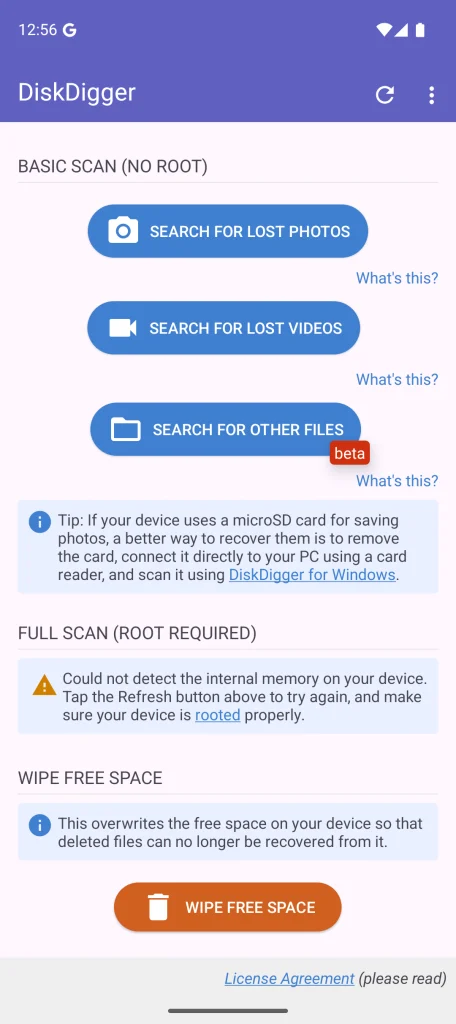
A particularly important distinction is whether the phone is rooted. Some deeper scanning capabilities may require root access, while basic scanning can work without it. Rooting an Android phone can also introduce security and stability risks, so users should understand those consequences before changing system-level access.
How the recovery process generally works
Using a recovery app is not the same as opening a backup folder and selecting a deleted picture. The software first scans accessible storage for data that resembles recoverable files.
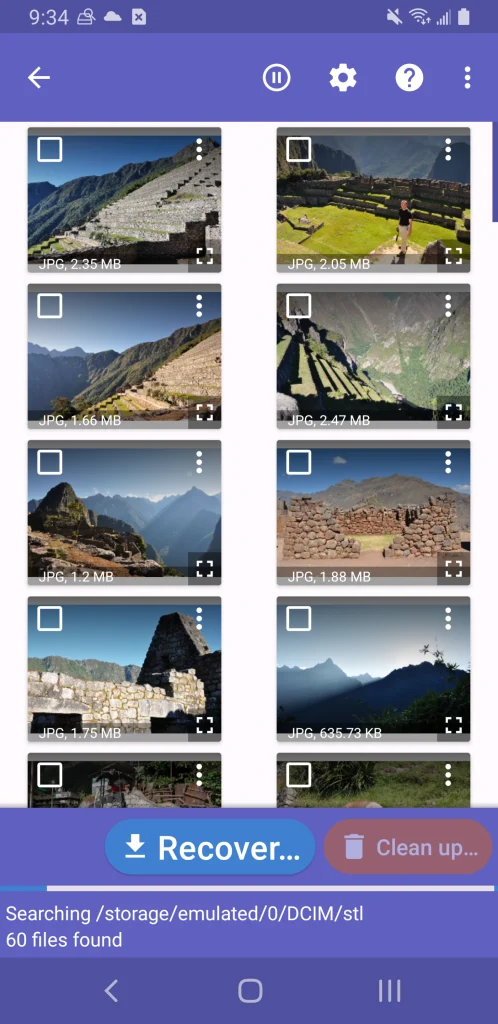
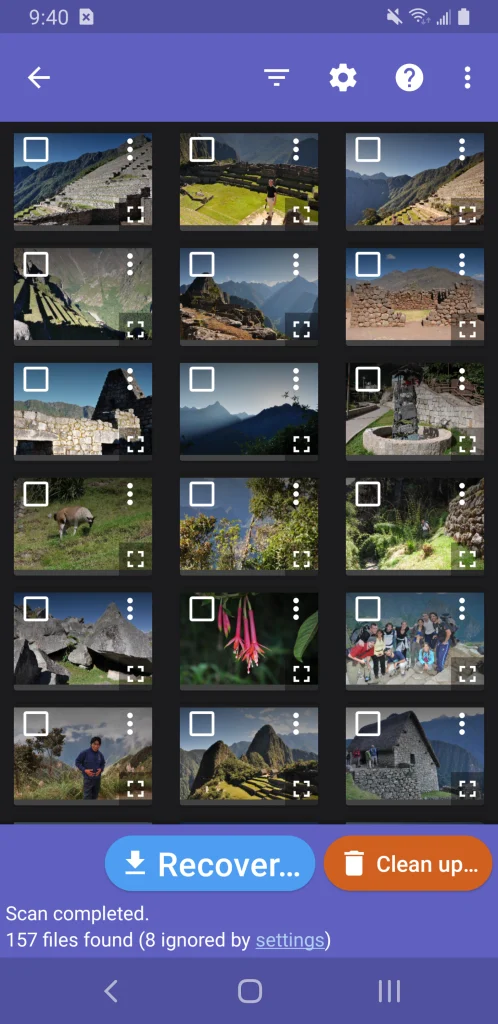
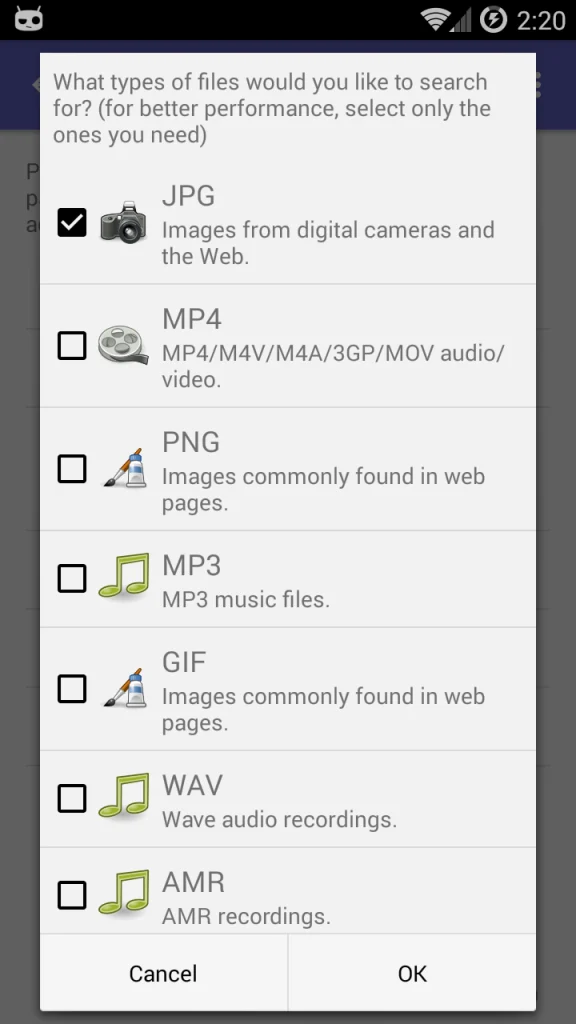
A typical process involves opening DiskDigger, choosing an available scan option and allowing it to search the relevant storage area. After scanning, the application can display files it identifies as potentially recoverable. You can then select the files you want and save recovered copies to a suitable location.
The most important practical rule is do not save recovered files to the same storage area you are trying to recover from if you can avoid it. Writing new data to that storage can potentially overwrite information that recovery software has not yet retrieved. For valuable files, saving recovered copies to cloud storage or another storage destination can be a safer approach.
Why some deleted photos cannot be recovered
A common misconception is that deleting a photo simply hides it until a recovery app brings it back. Real storage systems are more complicated.
Once deleted space is reused, parts of the original file may be overwritten. If that happens, recovery can become impossible or the recovered image may be incomplete. Modern Android devices may also use storage technologies and security mechanisms that make deleted-data recovery more difficult than it was on older phones.
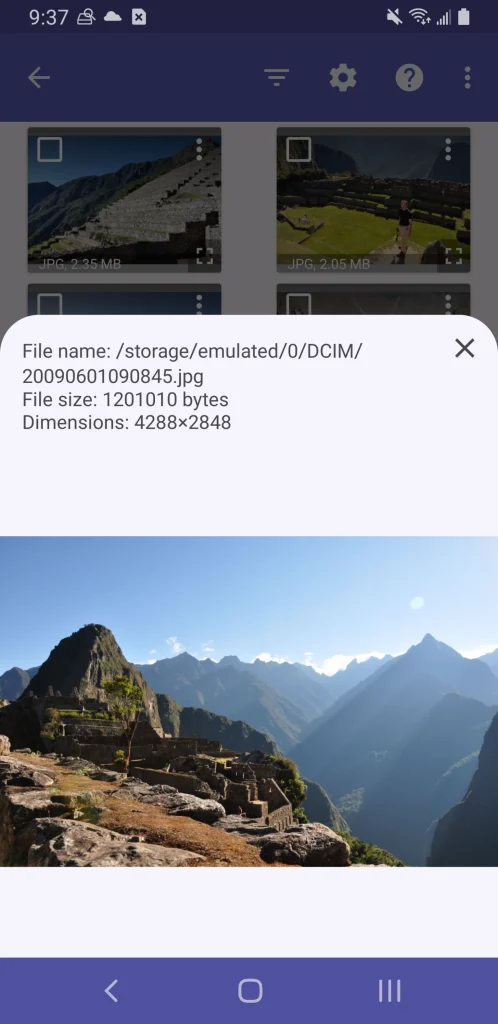
There is another limitation: a file appearing in a scan does not necessarily mean it can be restored perfectly. Recovery software may find fragments, thumbnails or damaged versions rather than the original full-resolution image. This is why DiskDigger should be viewed as a recovery attempt, not a guaranteed undelete button.
DiskDigger Pro mod APK versus checking your backups first
Before running a deep recovery scan, check places where your photos may already exist. Google Photos, another cloud backup service, messaging applications and computer backups can sometimes contain copies of images you thought were permanently deleted.
If a backup exists, restoring from it is generally simpler and less risky than attempting storage recovery. Also check the trash or recently deleted area provided by your gallery or photo service.
Many platforms retain deleted media for a limited period before permanently removing it. Recovery software becomes more relevant when those normal options do not contain the missing file.
Common mistakes that can reduce recovery chances
One of the biggest mistakes is continuing to use the phone normally after deleting important data. New photographs, app installations, downloads and system activity all involve writing information to storage.
Avoid installing multiple recovery applications and repeatedly scanning the device without a reason. If the missing data is genuinely important, unnecessary activity can make the situation worse.
Another mistake is trusting every recovered thumbnail. Preview the files carefully and check their resolution and condition before assuming the recovery succeeded.
Finally, be careful about where you save recovered files. A recovery application needs access to storage, so users should understand the permissions they grant and only use software obtained from a trustworthy source. You can also download the C.AI Mod APK.
Is DiskDigger worth trying?
The DiskDigger Pro APK can be worth considering when an important image has been accidentally deleted and no usable backup exists. Its strongest value is as an additional recovery option when ordinary methods such as the gallery’s trash or cloud backups have failed.
It is less appropriate to treat it as a replacement for regular backups. Recovery technology has unavoidable limits, especially when deleted data has already been overwritten or when modern device security restricts storage access.
If the files are irreplaceable, the safest approach is to stop unnecessary activity on the device, check every available backup or recently deleted location first and then consider recovery software. For future protection, automatic photo backups remain far more dependable than relying on recovery after something goes wrong.


![SD Movies Point APK Download [Latest Version] 2026](https://apkpure.co.in/wp-content/uploads/2023/12/SD-Movies-Point-icon-96x96.webp)